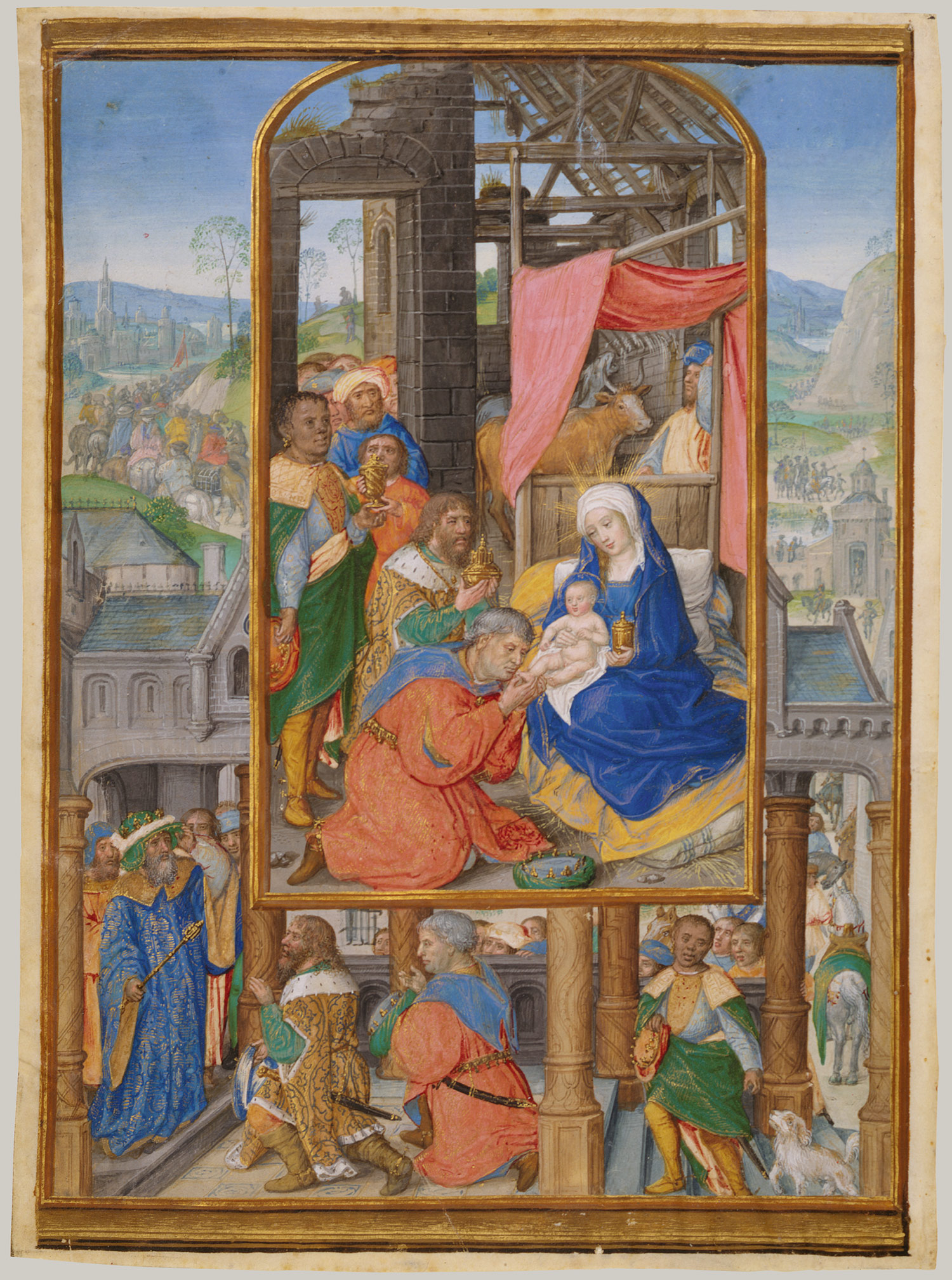
1)Adoration of the Magi, ca. 1520
Attributed to Master of James IV of Scotland
Ink and tempera on vellum; 6 5/8 x 4 4/5 in. (16.9 x 12.4 cm)
Bequest of George D. Pratt, 1935 (48.149.15)
(Below)
"Adoration of the Magi" By Hunter Jamison
A modern recreation of the older piece. Attempting to portray a more modern day message through impressionistic approach to form and interposition within the symbolic placement of the individual figures in the space.
 |
2) The piece was created in the year 1520 likely by "Master of James IV of Scotland". The piece matches many conventions seen in otherwise confirmed arts by the artist and appears to have been created in a time period where the artist was otherwise known to be creating works. Though, the creator of the piece is now a certainty.
"Identified by some with the Netherlandish painter and illuminator Gerard Horenbout, this artist was especially adept at manipulating and expanding the illusionistic effects of manuscript illumination".
3) The piece depicts the magi and their journey to see the Herod. The final bowing and meeting is superimposed over the representative journey portrayed behind the central scene. Emphasis is put onto the Magi's journey through the top left and clockwise to the bottom left through vivid colors not present in the center. This method had been utilized in the past by the artist but never used to superimpose an otherwise hidden theme through color.
4) The artist uses emphasis, contrast, size, color, brightness, position, space, and form all in tandem to convey a singular message of importance that is placed upon the central super-imposed image of a child in the woman's lap. The placement of the magi around and below the child serves to emphasize both the journeys length and the figures importance. Colors are used to emphasize specific individuals around the painting and size is reflective of the individual scene's importance to the artist. Where hazy texture are used to represent farther, more long-ago times in the magi's travels; clear colors and bold lines show the more recent and current stages of the magi's journey. All of this is used by the artist to place an emphasis both and the magi's journey and their final arrival at the paintings central destination.
5) The piece carries a rather apparent meaning. The child in the center, the meeting between him and magi kneeling before him, is super-imposed upon the magi's long journey to meet this holy child and his mother. The length and distance of the magis journey, conveyed using color emphasis, clarity, and relative size to communicate distance and importance, is used as a symbolic representation of the great importance placed in the pieces depicted journey. Like most holy art works created at this time, the piece is painted in tempera paint and uses very familiar styles to convey holy authority and figure. The holy orb and glow which bring emphasis to the child's importance,but, also to this holiness are key to the images final message. The magi, disciples of this holy child, have come from far to see this young icon and his mother. The painting most likely depicts the virgin mother and a baby Jesus, or a scene much like it, bringing special emphasis to the importance of a child which is depicted on a level equal with that of the son of god himself.

Be sure you do more with the little picture- look at and cite specific examples of format, structure, language, etc. It will strengthen your analysis and provide more depth/ examination of effect in your big picture. Also- think about effect of choices (by the artist here) on the audience.
ReplyDeleteYour sketch is awesome!
Delete